
December 1, 2025

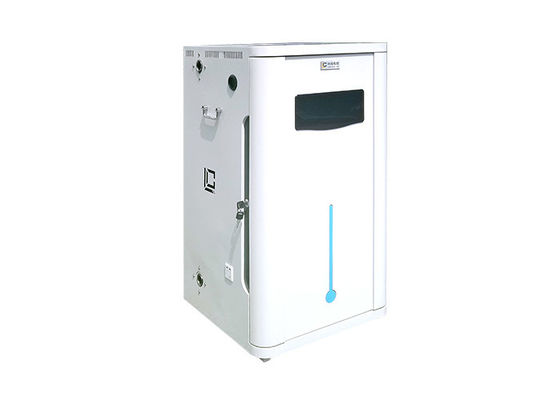
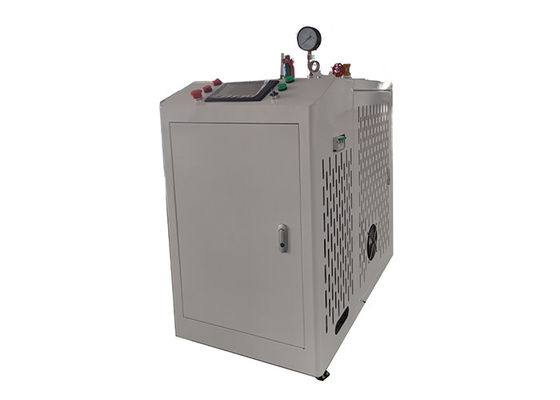
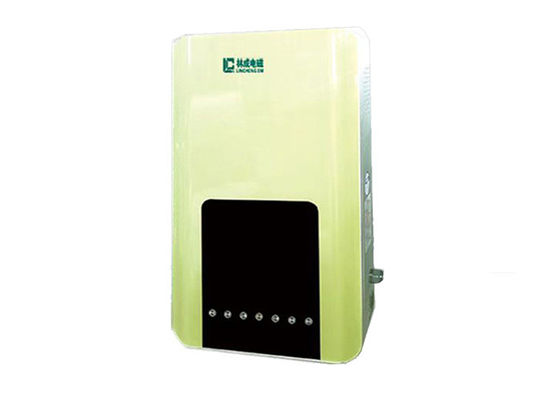
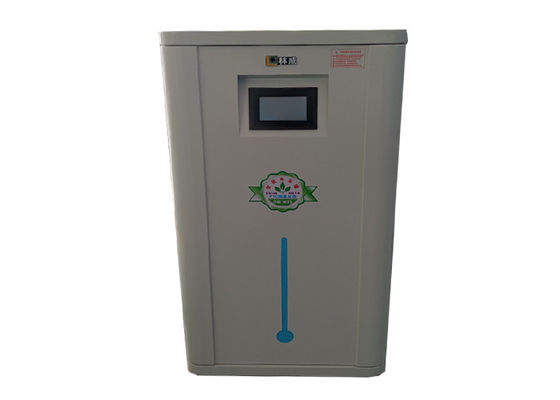
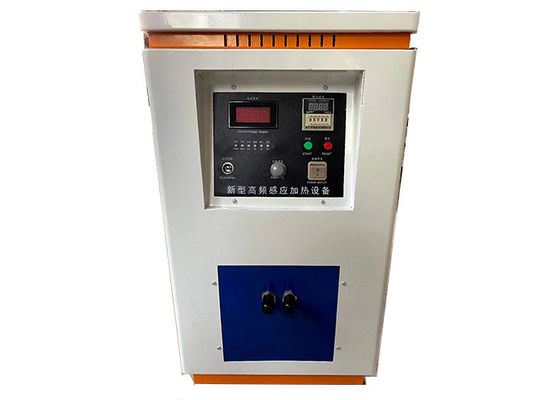
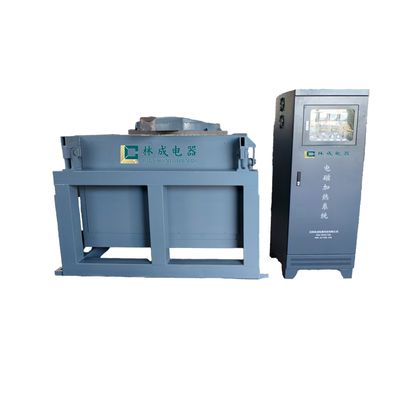
Electromagnetic heating for reaction kettles is an advanced technology that utilizes the principle of electromagnetic induction to make the kettle body itself generate heat directly.
Basic Principle:
Generating an Alternating Magnetic Field: A power supply system (typically medium or high-frequency) converts standard mains electricity into medium or high-frequency AC current and delivers it to an induction coil wrapped around the kettle.
Heat Generation via Eddy Currents: The induction coil produces a rapidly changing alternating magnetic field. This magnetic field penetrates the kettle wall (metal material), inducing powerful eddy currents within the kettle body.
Kettle Body Self-Heating: Due to the electrical resistance of the kettle's metal material, the powerful eddy currents overcome this resistance, generating significant Joule heat, which causes the reaction kettle body itself to heat up rapidly and efficiently.
Heat Transfer: Heat is transferred directly and uniformly from the high-temperature kettle wall to the internal materials.
Key Difference: Electromagnetic heating causes the kettle body itself to generate heat, unlike traditional methods that transfer heat from an external source via a medium (such as thermal oil or steam).
| Characteristic | Electromagnetic Induction Heating | Traditional Jacket/Resistance Heating |
|---|---|---|
| Thermal Efficiency | Extremely High (≥90%) | Low (30%-70%) |
| Heating Speed | Extremely Fast, acts directly on the kettle body | Slow, requires heating a medium first |
| Temperature Control | Precise & Responsive, enables complex temperature profiles | Sluggish, poor precision |
| Safety | Very High, coils themselves remain cool, can be fully explosion-proof | Risks of thermal oil leakage/fire, boiler explosion |
| Maintenance Cost | Low, no moving parts, long coil lifespan | High, periodic replacement of resistance bands, de-scaling |
| System Structure | Simple & Compact, no need for boilers, oil furnaces, etc. | Complex, requires boilers, oil pumps, piping, etc. |
| Cleanliness & Eco-Friendliness | Clean, no pollution, low noise, no open flame | Presence of oil smoke, noise, combustion exhaust |
Summary of Core Advantages:
Energy Saving & Consumption Reduction: Extremely high thermal efficiency. Saves over 30% energy compared to resistance heating and can save over 50% compared to thermal oil heating. This is its primary economic value.
Enhanced Safety:
Intrinsically Safe: Induction coils operate at low voltage and remain cool to the touch.
Superior Explosion-Proofing: The entire heating system can be designed with explosion-proof (e.g., Ex d, Ex e) ratings, perfectly meeting chemical plant safety requirements.
Eliminates Risks: Completely avoids the risks of thermal oil coking, leakage, fire, and steam boiler explosions.
Precise Temperature Control: For processes like polymerization and synthesis that require strict temperature control, it enables precision of ±1°C or better, significantly improving product quality and consistency.
Reduced Operating Costs: Eliminates the need for boiler operators and reduces maintenance frequency and costs, leading to a substantial decrease in overall operating expenses.
Retrofitting a traditional reaction kettle for electromagnetic heating requires systematic engineering design, not just wrapping a coil around it.
Kettle Body Material Selection:
Must be a magnetically permeable metal, such as carbon steel or magnetic stainless steel (e.g., 430, 304).
For non-magnetic materials (e.g., 316L, titanium, glass-lined kettles), an external layer of magnetic material (e.g., a carbon steel sleeve) must be added to act as the induction heating layer.
Insulation Layer Design:
High-performance thermal insulation materials (such as nano porous materials, ceramic fiber) must be installed between the coil and the kettle body.
The purpose is to prevent heat loss to the environment, directing the thermal energy "inward" towards the materials. This is key to ensuring high efficiency.
Power Supply and Control System:
Select the appropriate medium/high-frequency power supply power and frequency based on the kettle's volume and required heating rate.
Integrate a PLC and touchscreen HMI for precise temperature programming, power adjustment, data logging, and alarm protection.
Structural Design and Installation:
Often designed as a split-type structure for easy on-site installation and disassembly without interfering with existing agitation, piping, or other systems.
Ensure an even gap between the coil and the kettle body to guarantee uniform heating.
Electromagnetic heating is particularly suitable for the following chemical processes:
Polymerization: Reactions like PVC, PA, PET which require very specific temperature profiles.
Fine Chemical Synthesis: Synthesis of pharmaceutical intermediates, pesticides, dyes requiring precise temperature control.
Oleochemical Processes: Fatty acid distillation, esterification reactions.
High-Temperature & High-Pressure Reactions: Hydrogenation, oxidation, and other reactions conducted under severe conditions with high safety demands.
Replacing Polluting Heating Methods: Substituting coal or oil-fired boilers to achieve cleaner production.
Q1: Does electromagnetic heating make the reaction kettle magnetic? Does it affect the materials? A1: Yes, it does. The kettle body becomes magnetized under the AC current. However, for the vast majority of chemical processes, this magnetic field has no observable effect on the chemical reactions or the materials themselves. Evaluation is only needed for a very small number of special materials sensitive to magnetic fields.
Q2: Can electromagnetic heating cause localized overheating of the kettle body? A2: Proper design can completely prevent this. Through reasonable coil winding, the use of magnetic flux concentrators to guide the field distribution, and the inherent thermal conductivity of the kettle metal, a high degree of temperature uniformity across the entire reaction kettle can be achieved.
Q3: Is the retrofit investment cost high? What is the payback period? A3: The initial investment is typically higher than for traditional heating equipment. However, due to significant energy savings, enhanced safety, and reduced operating costs, the payback period is usually between 1 to 3 years. From a total lifecycle cost perspective, it is a highly profitable investment.
Q4: Can it be used for existing glass-lined reaction kettles? A4: Yes, but it requires special design. A specifically designed carbon steel induction sleeve must be fitted around the external surface of the glass-lined kettle. The sleeve heats up and then transfers the heat to the inner glass-lined kettle. This effectively protects the fragile glass lining from thermal shock damage.
Electromagnetic heating technology for chemical reaction kettles, with its outstanding advantages of high efficiency, safety, precision, and environmental friendliness, is becoming a mainstream direction for upgrading chemical process heating. It is not only a powerful tool for achieving energy conservation and consumption reduction but also a robust technological guarantee for enhancing the intrinsic safety level and product quality in chemical production.